
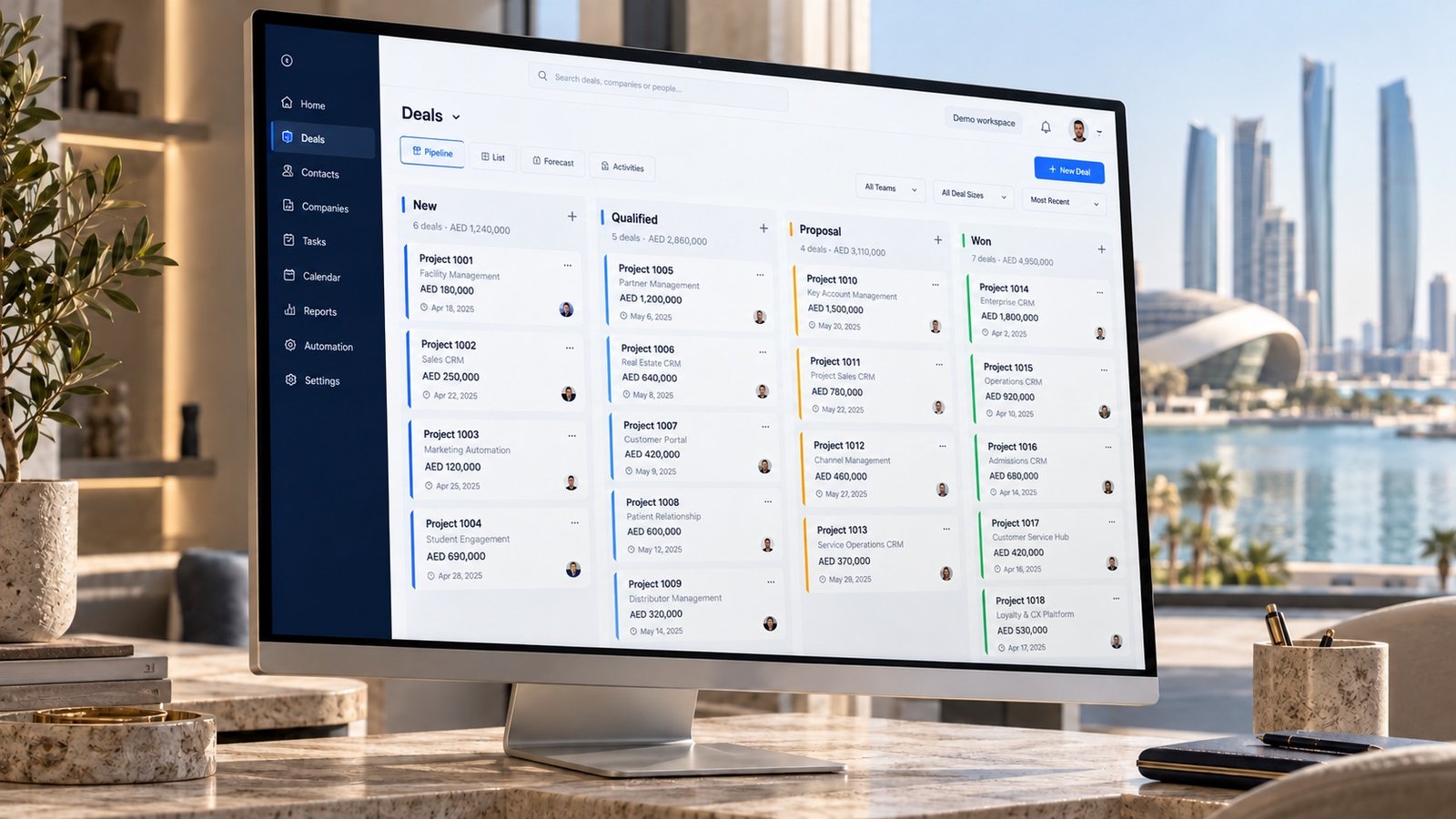
CRM software in Abu Dhabi is most useful when it reflects how your team actually wins work. A project-services business may need several conversations, a technical review and revised proposals before an opportunity is decided. A simple list of contacts cannot show which deals need action or why a proposal has stalled.
Abu Dhabi's Department of Economic Development identifies advanced technology and the digital economy as areas of focus. For an individual business, the sensible response is to solve a specific operational problem. This guide addresses B2B sales coordination rather than promising that software alone will create demand.
Organise the account, not only the contact
A single prospective customer may include a technical evaluator, a purchasing contact and a budget holder. Keep those people associated with the same account while recording their distinct responsibilities. Where the customer has multiple sites or projects, make it clear which opportunity relates to which location and scope.
For example, a maintenance provider may discuss an annual service arrangement and a separate equipment upgrade with the same organisation. These should be separate opportunities with their own value, next action and proposal history. This is an illustrative workflow, not a client case study.
Use sales stages with clear entry requirements
- New enquiry: the source, requested service and assigned owner are recorded.
- Qualified: the business need and appropriate next conversation are understood.
- Scope review: technical questions and outstanding documents are tracked.
- Proposal sent: the exact version, recipient and follow-up date are recorded.
- Decision pending: remaining objections, dependencies and agreed next steps are visible.
- Won or lost: the outcome and reason are recorded consistently.
Adapt these stages to your process. Avoid moving a deal forward simply because a salesperson sent an email. A stage should represent a meaningful change in the buying process.
Make follow-up explicit and useful
Every open opportunity should have an owner and a next action. A reminder to call someone is stronger when it includes the purpose: confirm a site visit, answer a technical question or discuss a revised scope. Set escalation rules for genuinely unattended enquiries rather than sending repetitive reminders to the whole team.
Keep proposal versions easy to compare. If pricing, deliverables or assumptions change, record the approval and the version sent to the customer. Store documents in an agreed location with appropriate permissions rather than scattering attachments across personal inboxes.
Choose integrations around a clear data owner
Website forms can create or update a lead, while a confirmed order may be passed to an ERP or project-management tool. Decide how duplicate contacts are detected, how failures are reported and which system is authoritative for each field. Email and messaging integrations depend on the provider, permissions and the agreed scope; verify them before assuming they are included.
Limit access by role, remove access when staff leave and agree on retention and export procedures. Ask a prospective supplier to demonstrate these controls using realistic roles, including a salesperson who should not see every account.
Measure the process before adding automation
Start with unassigned enquiries, overdue next actions, time in each stage and proposal outcomes. Separate genuine lost opportunities from duplicates or irrelevant enquiries so your reports remain useful. Forecast values should be treated as estimates, not guaranteed revenue.
Can we migrate existing spreadsheets?
Usually, but first standardise company names, remove duplicates and identify which notes are still useful. Import a small sample, review account relationships and validate totals before migrating everything.
Does every business need a custom CRM?
No. Configure an established product when it meets the workflow. Consider custom development when important approvals, integrations or operating rules cannot be supported economically by the available options.
Discuss your Abu Dhabi CRM requirements
Ultimate Solutions works remotely from India with UAE businesses. Review our CRM development service and Abu Dhabi coverage. Request a discovery discussion with your sales stages, team roles, existing tools and the follow-up problems you want to resolve.
Market context: Abu Dhabi DED's advanced technology overview. No affiliation or endorsement is implied.