
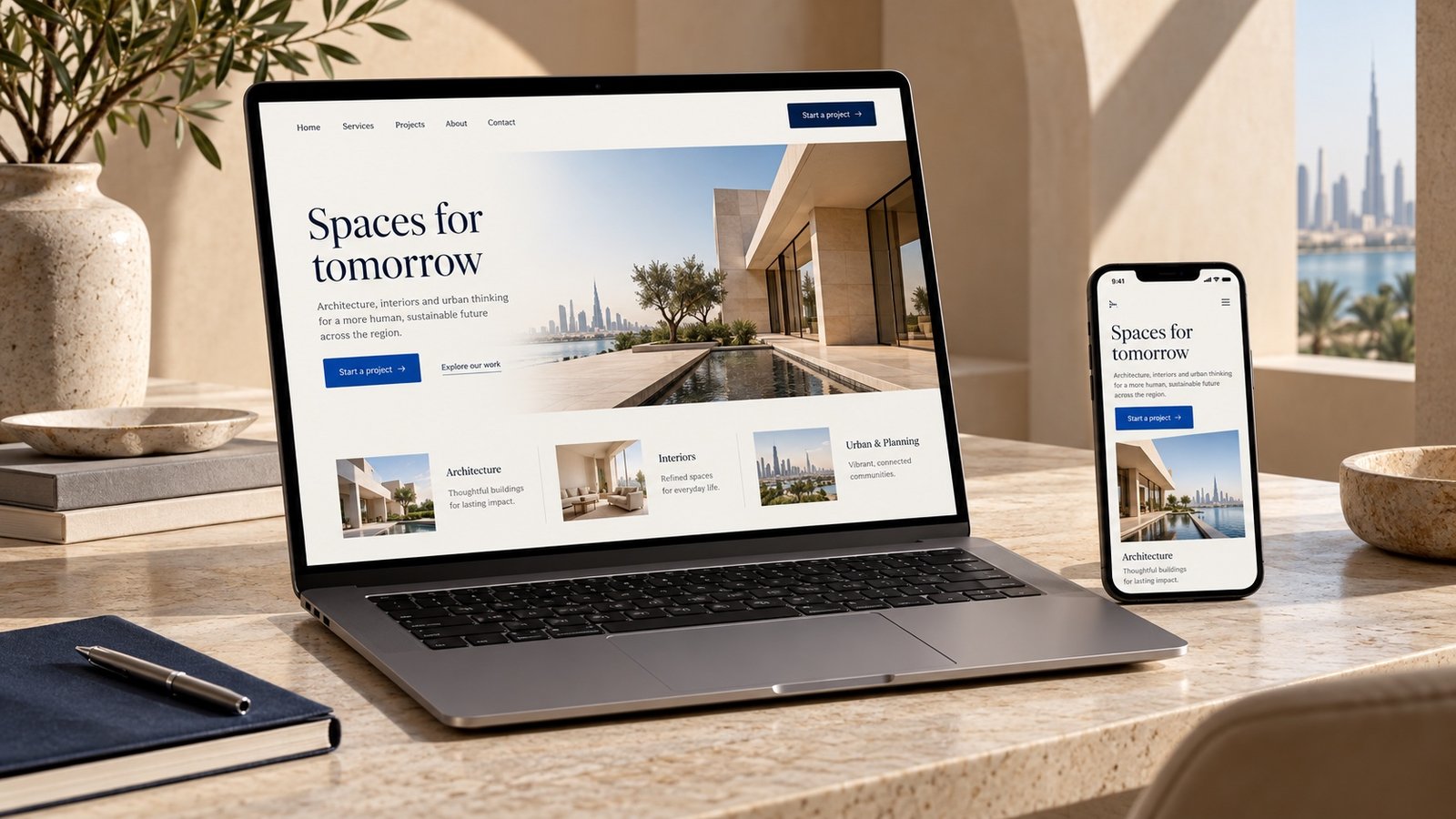
A business website in Dubai should help a visitor understand what you offer, decide whether you are suitable and contact the right person. Visual polish matters, but a beautiful homepage cannot compensate for vague service descriptions, broken mobile forms or enquiries that disappear into an unattended inbox.
Dubai Chambers' digital economy work provides useful context for a market investing in digital business. It does not tell you which website will convert best. Your brief should come from your audience, the services you sell and the information buyers need before making contact.
Start with the enquiry you actually want
Define a qualified enquiry before drawing a homepage. A fit-out company may need the property type, approximate area and intended start date. A B2B consultant may need the business activity, current challenge and decision timeline. An online shop needs a purchase journey rather than a long quotation form. These are illustrative examples, not promises about a particular industry.
Write one primary action for each important page. It might be requesting a proposal, arranging a discovery call or checking a product specification. Keep secondary actions available without presenting every visitor with several competing buttons.
Build service pages around buyer questions
- Scope: describe what is included, what is optional and which problems the service solves.
- Process: explain discovery, approvals, delivery and support.
- Evidence: show genuine examples with permission; identify demonstrations as demonstrations.
- Coverage: state the locations you serve and how work is delivered.
- Next step: place a relevant contact action beside the information that motivates it.
A Dubai service page should contain useful local context when it affects delivery. Do not create dozens of identical pages with different district names. If your company works remotely, state that clearly rather than implying a Dubai office that does not exist.
Test the mobile journey before approval
Open the proposed website on a small phone screen. Can you read the service summary without zooming? Can you close the menu, tap a contact button and submit the form with the keyboard open? Check that image and video effects leave the page usable on a slower connection.
Use descriptive form labels, visible validation messages and a clear confirmation after submission. Test the full delivery route: the enquiry should reach the intended inbox or CRM, carry the correct page context and be assigned for follow-up. A form animation is not proof that the message was received.
Decide on Arabic and English deliberately
A bilingual website needs more than translated headlines. Plan right-to-left layouts, navigation, forms, filenames where relevant and a review process for Arabic copy. Use language-specific URLs and appropriate language signals when both versions are maintained. If the initial launch is English-only, document the future Arabic requirements so the design can accommodate them.
Include an SEO launch checklist
Ask for meaningful page titles, concise descriptions, crawlable content, descriptive headings, internal links and a sitemap. If replacing an existing website, map old URLs to the most relevant new pages and check redirects. Keep staging sites out of search results and confirm that production pages are not accidentally marked noindex.
Measure qualified form submissions and useful sales conversations alongside traffic. Search visibility takes ongoing content and technical work; no responsible proposal can guarantee a first-place ranking simply by launching a redesign.
What should the development proposal specify?
Compare page scope, content responsibilities, language versions, hosting, source-code access, integrations, revisions and ongoing support. Ask who owns the domain and analytics accounts. Keep an acceptance checklist with named owners for mobile testing, form delivery, content review and launch approval.
Should we use a template or custom development?
A template can fit a simple, standard requirement. Custom development is worth considering when your workflows, integrations or content structure cannot be supported well by the available templates. The decision should follow requirements, not a blanket preference.
Discuss your Dubai website brief
Ultimate Solutions serves UAE clients remotely from India. Review our website development service and Dubai service coverage, then share your website requirements. Include your audience, current URL, services, languages and the enquiries you want to generate.
Market context: Dubai Chamber of Digital Economy. This independent checklist does not imply endorsement.